
Biological and ecological engineering
Enhance your biological engineering skills and solve today’s complex challenges when you earn your Master of Engineering in Biological and Ecological Engineering online from Oregon State University. This program is designed for engineers ready to build on their bachelor’s degree and transition into sustainability-focused, ecologically grounded work.
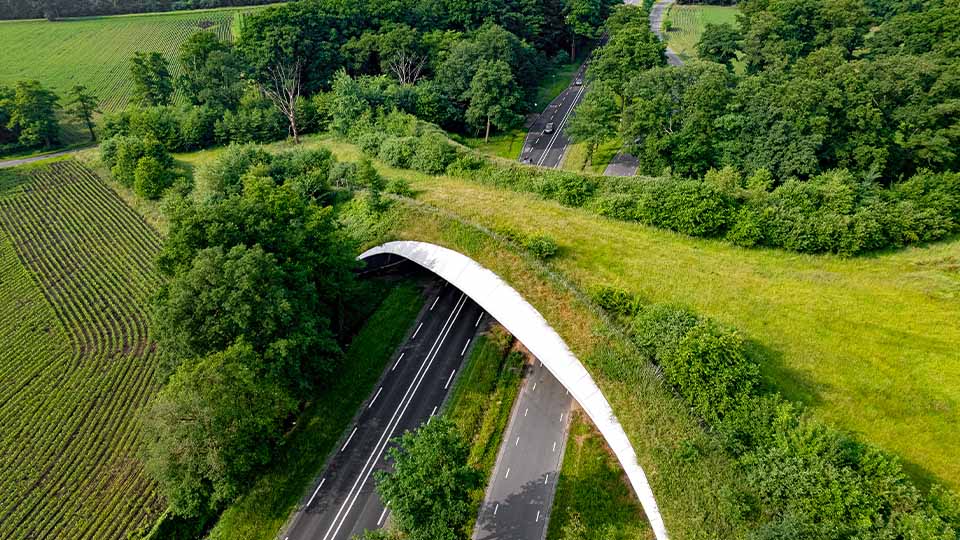
You’ll develop a systems-level understanding of how water, materials and pollutants move through ecosystems and working landscapes, and expand your expertise through electives in areas such as agrivoltaics, wildlife crossings and post-wildfire restoration. You’ll graduate prepared to design solutions that are technically sound and environmentally resilient. And your coursework can satisfy the professional development hours required for licensed professional engineers.
Skills you’ll gain in OSU’s online Master of Engineering in Biological and Ecological Engineering program
As a student in Oregon State’s online MEng BEE degree program, you’ll gain the in-demand skills you need to stand out in the job market and level up your career. You’ll learn from expert, experienced Oregon State faculty from one of the nation’s leading institutions in applied engineering.
- Bioremediation
- Pollution control
- Spatial data analysis
- River engineering
- Irrigation design
- Subsurface transport
- Hydrologic modeling

Program details
The biological and ecological engineering online master’s program emphasizes applied engineering concepts, including water resources engineering, biosystems modeling and bioremediation engineering. You can tailor your degree plan through electives in subjects such as agrivoltaics, river engineering, engineering management, ecological restoration and hydrology.
The online MEng BEE program is offered through a collaboration between Oregon State’s College of Engineering and College of Agricultural Sciences — both leaders in innovative solutions to today’s complex challenges.
Degree requirements
A total of 45 quarter credits is required to graduate with your Master of Engineering in Biological and Ecological Engineering. Degree requirements and curriculum information are available on Oregon State's academic catalog.
Additional program features
Admission requirements
Explore the detailed admissions information for the MEng BEE program, including any application deadlines and required documents, on the Office of Graduate Education website.
Program start dates
Students are admitted to this program four times per year, and you can begin your studies in fall, winter, spring or summer. Visit Oregon State's academic calendar for term start dates.
Start on the pathway toward a master’s degree
Oregon State provides a pathway to your MEng BEE degree through the graduate certificate in water resources engineering delivered online. If you choose the certificate pathway, the credits you earn apply directly toward the MEng BEE program. Up to 22 graduate credits may be transferred toward a 45-credit master’s degree. Please note: Successful completion of the water resources engineering certificate does not guarantee admission to an Oregon State master’s program.
Applying credits like this, an approach known as stacking, can help you build credentials over time and advance your career. It's also a great way to test a field of study through a series of courses before committing to a full degree program. For students like Ali Lanenga, stacking can make a journey to a degree feel more manageable.
Explore certificates and microcredentials
You can gain highly specialized skills that are in demand by employers — and do it with less of a time and financial commitment — when you earn a certificate or microcredential online from Oregon State. Choose from a large collection of short-form offerings that can help you upskill quickly.
Careers in biological and ecological engineering
Earning your master’s degree in biological and ecological engineering online will prepare you to work at the intersection of engineering and the natural environment. Whether that’s through irrigation optimization, designing fish and wildlife crossings that reconnect fragmented habitats, advancing post-wildfire restoration strategies, integrating agrivoltaics to colocate food and energy production or another form of applied engineering, you’ll be prepared to make a difference.
Job market outlook
Use the interactive tool on this page to discover employment trends, top occupations and salary details for professionals who have skills related to biological and ecological engineering. Please be aware that completing a program related to the job market information shown here does not guarantee employment or a specific salary.
Related programs
3 programs available

Water Resources Engineering
Graduate Certificate
Study the hydrologic cycle and learn modeling and analysis skills, so you can help develop more sustainable solutions for water resources management.

Environmental Sciences
M.S. or PSM
Choose between two master’s pathways in the environmental sciences. Gain rigorous training and focus on research areas like ecosystem function and health, water and natural resources management, environmental policy, and future climate scenario impacts.
Environmental Management
Graduate Certificate
Help organizations build more sustainable practices with skills in environmental management systems, ESG reporting and investing, humanitarian engineering, green infrastructure and more.
Request
information
To ensure that you receive emails from us, please add "ecampus@oregonstate.edu" and these domains to your safe senders list: “@oregonstate.edu,” “@discover.oregonstate.edu” and “@email.oregonstate.edu.”
† All mobile information you share will remain confidential and will never be given to external sources. Any costs associated with receiving a text message are the responsibility of the individual receiving the message. Opting in to this mobile text messaging service from Ecampus is free of charge, however, message and data rates may apply. Reply STOP to opt-out. Text HELP for help. Message frequency varies.
Contact
Our enrollment services team can help answer questions about online learning at Oregon State Ecampus and how to get started.
8 a.m-4 p.m. PT Monday-Friday
Contact Ecampus or book an appointment
To ensure that you receive emails from us, please add "ecampus@oregonstate.edu" and these domains to your safe senders list: “@oregonstate.edu,” “@discover.oregonstate.edu” and “@email.oregonstate.edu.”
Book an appointment
Program specific questions
Get answers to your questions about pursuing an online biological and ecological engineering degree.
Contact the College of Engineering
For questions about the program, including admissions and curriculum information, please contact the BEE Department in OSU’s College of Engineering at bee-info@oregonstate.edu.


